

Release Agent Supplier · Ahmedabad, Gujarat
Release Agent for FRP Ahmedabad, Gujarat Reliable Mould Release Solutions
Shanti Multilink supplies a dependable release agent for FRP Ahmedabad, Gujarat, and Rajasthan based manufacturers rely on for clean demoulding, better surface finish, and longer mould life across pultrusion, hand lay-up, and casting work.
The Basics
What Is a Release Agent?
A release agent is a chemical formulation applied on a mould surface before the resin, gel coat, or composite material is poured or laid up. It creates a thin separation layer between the mould and the finished part, so the cured product can be lifted out cleanly without sticking, tearing, or damaging the mould face.
In FRP and composite work, this separation layer matters because resins bond strongly during cure. Without a proper release agent, parts can stick, gel coats can chip, and residue often has to be cleaned off before the next cycle. As a release agent for FRP Ahmedabad, Gujarat manufacturers depend on, the right product supports smooth demoulding, protects the mould, and keeps the surface finish of the finished item consistent across batches.
Release Agent Solutions
Our Release Agent Solutions
As a release agent supplier working across Ahmedabad, Gujarat, and Rajasthan, we cover FRP, composite, and pultrusion requirements for factories, workshops, and industrial units.
01
FRP Release Agent
Formulated for glass fibre reinforced plastic work used in hand lay-up, spray-up, and RTM for tanks, panels, roofing sheets, and industrial covers.
02
Mould Release Agent
Suited to open and closed moulding processes where clean release, reduced sticking, and mould surface protection matter across repeated cycles.
03
Pultrusion Release Agent
Built for continuous pultrusion of profiles, where stable release behaviour and consistent performance across long production runs are needed.
04
Composite Release Agent
Used in polyester, vinyl ester, and epoxy composite production to support clean part release and maintain the finish of structural components.
05
Internal Release Agent
Blended into the resin system itself useful where fewer application steps are preferred and quicker cycle turnaround is a priority.
06
External Release Agent
Applied directly on the mould surface for a controlled, reliable release layer suited to varied moulds and mixed production requirements.
Our Products
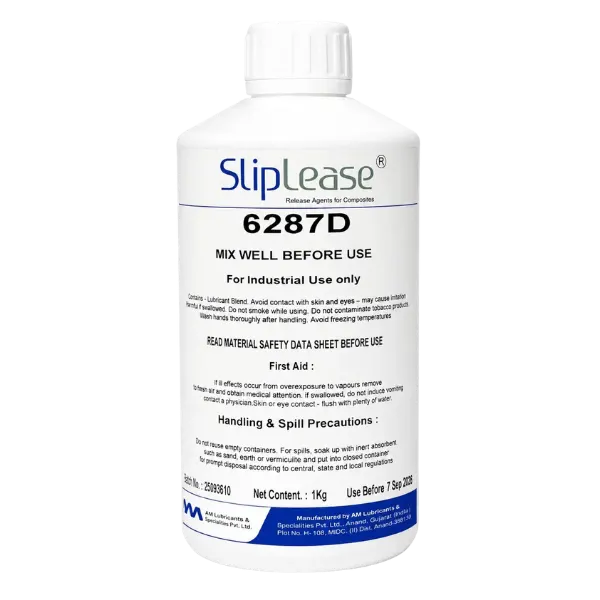
Release Agent
Alongside application guidance, we supply industrial-grade release agents in liquid form, available in internal and external grades for FRP pultrusion, FRP hand lay-up, and electrical casting work.
An industrial release agent supplied in liquid form for FRP and composite production. Suited to FRP pultrusion, FRP hand lay-up, and electrical casting applications, available as internal and external release grades based on the mould type, resin system, and production requirement.
Category
Process Chemicals
Applications
FRP Pultrusion, FRP Hand Lay-up, Electrical Casting
Form
Liquid
Available Grades / Specifications
Internal Release Agents, External Release Agents
Storage / Handling
Standard store in original sealed containers, away from direct heat and moisture, in a dry, ventilated area.
For industrial use only. Product selection is based on your mould material, resin system, and production process. Full handling and safety information is available on request or via the product label.
Why It’s Used
Benefits of Using Release Agent
-
Smooth mould release
Cleaner demoulding with less manual effort during each production cycle.
-
Better surface finish
Supports a more consistent finish on the finished FRP or composite part.
-
Improved production efficiency
Faster demoulding contributes to steadier cycle times across shifts.
-
Reduced sticking
Cuts down on parts adhering to the mould face and the rework that follows.
-
Mould protection
Adds a working layer that helps protect the mould face from repeated wear.
-
Lower cleaning effort
Less residue on the mould reduces cleaning time between production runs.
Applications
Where Can Release Agents Be Used?
Release agents are used across a wide mix of manufacturing environments in Ahmedabad, Gujarat, Rajasthan, and beyond.
Epoxy Resin
Epoxy resins have wide application range like Civil Construction,Electrical and Electronics, Composite,
LAPOX Epoxy Systems - By Chemical Category
- Bisphenol A Based Epoxy Resins
- Curing Agents – Phenalkamines
- Bisphenol F Based Epoxy Resins
- Curing Agents – Aromatic Amines : Modified
- Multifunctional Epoxy Resins
- Curing Agents – Aromatic Amines : Unmodified
- Cycloaliphatic Epoxy Resins
- Curing Agents – Linear Aliphatic Amines & Adducts
- Brominated Epoxy Resins
- Curing Agents – Cycloaliphatic Amines, their Adducts & Polyaminoamides
- Reactive Diluents
- Curing Agents – Formulated Anhydrides
LAPOX Epoxy Systems - By Application
How It Works
Our Release Agent Application Process
How a release agent is applied has just as much effect on release quality as the product itself, which is why we treat every step as part of the recommendation.
-
Application Requirement Assessment
We first understand the mould type, resin system, cure temperature, and production frequency so the recommendation fits actual working conditions.
-
Surface Preparation
A clean, dry mould surface matters. Dust, old release film, or contamination is removed so the release agent bonds evenly with the mould.
-
Release Agent Application
The product is applied by cloth, spray, or brush depending on mould size and shape. Even coverage helps avoid patchy release during demoulding.
-
Drying / Setting
Suitable drying time is allowed so the release layer sets properly before the resin is poured, sprayed, or laid up.
-
Production Testing
A short test cycle helps confirm that release performance and surface quality meet the required standard before full production runs.
-
Continuous Improvement
Based on how the product performs during actual production, we can suggest adjustments to grade, dosage, or application method.
Selection Guide
Choosing the Right Release Agent System
There is no single release agent that suits every mould or process. The right choice usually depends on a few practical factors.
Mould material
Steel, aluminium, FRP, and wood moulds each behave differently and often need different release systems.
Resin system
Polyester, vinyl ester, and epoxy systems have different bonding behaviour, which affects grade selection.
Production process
Hand lay-up, pultrusion, and electrical casting each place different demands on release performance.
Temperature conditions
Cure and ambient temperature affect how the release layer sets and performs during demoulding.
Production frequency
High-cycle production and occasional runs call for different re-application intervals.
Surface finish required
Structural, semi-gloss, or high-finish parts each guide the type of release agent used.
Why Shanti Multilink
Why Choose Shanti Multilink for Release Agent Solutions?
- As a release agent supplier working with FRP and composite manufacturers, we take time to understand the production process before recommending a grade, rather than pushing the same product for every requirement.
- Our focus starts with the mould, resin system, and cycle frequency, since these directly affect how a release agent will perform. Grade selection internal or external is guided by your actual production setup, not a fixed package.
- We support customers with application guidance, product consistency, and clear communication on availability and pricing, so you know what to expect when you place a repeat order.
- Our supply reaches industrial customers across Ahmedabad, wider Gujarat, and Rajasthan, and we aim to be a practical partner you can call for product advice not just when it is time to reorder.
FAQs
Frequently Asked Questions
A release agent is used to create a separation layer between a mould and the material being cured, so the finished part can be demoulded cleanly without sticking or damage to the mould surface.
FRP resins bond strongly as they cure. A release agent prevents the part from sticking to the mould, protects the mould face over repeated cycles, and helps maintain a smooth finish on the finished product.
Yes. Release agents are available for steel, aluminium, FRP, and other common mould materials. The right grade depends on the mould type and the production process being used.
Consider the mould material, resin system, cure temperature, cycle frequency, and required surface finish. Sharing these details with your supplier helps narrow down the suitable grade quickly.
Mould cleanliness, evenness of application, drying time, cure temperature, and compatibility with the resin system all affect how well the release agent performs in production.
Yes. Pultrusion-specific release agents are designed for continuous, higher-temperature production and support steady release performance across long production runs.
Share your process details mould type, resin system, and production requirement with our team, and we will recommend a suitable grade, application method, and packaging for your operation.
Get the Right Release Agent Solution for Your Manufacturing Needs
Tell us about your mould, process, and resin system, and we will help you select a suitable release agent for FRP Ahmedabad, Gujarat, or Rajasthan based production along with product details and a quotation.