

Coupling Agent Supplier · Gujarat, India
Coupling Agent Supplier Gujarat | Silane Coupling Agent Distribution in India
Shanti Multilink handles silane coupling agent distribution in India, supplying composite, FRP, and fibreglass manufacturers across Gujarat, Rajasthan, Morbi, Himatnagar, and Silvasa with reliable bonding chemistry.
The Basics
What Is a Silane Coupling Agent?
A silane coupling agent is a chemical that helps bond two very different types of material typically an inorganic surface, like glass or a mineral filler, and an organic material, like a resin or polymer. On its own, a fibreglass surface or a filler particle doesn’t bond well with resin. The silane molecule has two reactive ends, one that attaches to the inorganic surface and one that reacts with the organic material, effectively bridging the two.
This matters in FRP and composite manufacturing because the strength of a finished part often comes down to how well the resin bonds to the reinforcement or filler inside it. As a coupling agent supplier in Gujarat, we see silane treatment used wherever manufacturers need that bond to hold up under everyday stress, moisture, or repeated use, rather than just at the point of manufacture.
Silane Coupling Agent Solutions
Our Silane Coupling Agent Solutions
We support a range of silane coupling agent requirements for FRP, composite, and industrial manufacturing across Gujarat, Rajasthan, and other parts of India.
01
FRP Silane Coupling Agent
Used in FRP manufacturing to improve the bond between fibreglass reinforcement and resin, supporting stronger, more consistent finished parts.
02
Composite Silane Coupling Agent
Applied in composite material processing to improve fibre and resin compatibility, which helps enhance manufacturing consistency across batches.
03
Industrial Silane Coupling Agent
Used across various industrial applications where strong material bonding is needed between fillers, coatings, or reinforcements and a resin matrix.
04
Fibreglass Surface Treatment Agent
Applied directly to fibreglass and reinforcement materials to improve adhesion and support better overall composite performance.
Our Products
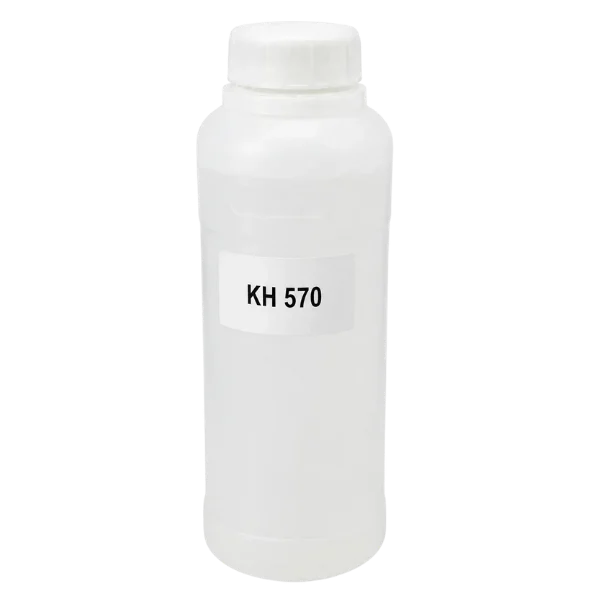
KH 570 Silane Coupling Agent
We supply KH 570 silane coupling agent as an imported, liquid-form product, available at 98.5% purity and above.
An imported silane coupling agent supplied in liquid form, used primarily in quartz tile manufacturing to improve bonding between the mineral filler and the resin binder. As a silane coupling agent supplier, we source this product at 98.5% purity and above for consistent processing results.
Category
Specialty Chemicals
Applications
Quartz Tiles
Form
Liquid
Available Grades / Specifications
Purity: 98.5% and above
Storage / Handling
Standard
Source
Imported
As part of our silane coupling agent distribution in India, we supply KH 570 to manufacturers across Gujarat, Rajasthan, Morbi, Himatnagar, and Silvasa. Full technical and handling details are available on request.
Why It’s Used
Benefits of Using Silane Coupling Agent
-
Improved bonding strength
Helps resin adhere more effectively to fibreglass, fillers, or reinforcement materials.
-
Enhanced composite performance
A stronger fibre-resin bond generally supports better overall part performance.
-
Better fibre-resin interaction
Supports more even resin wet-out across reinforcement or filler surfaces.
-
Support for consistent quality
Helps manufacturers get more predictable results across repeated production runs.
-
Better compatibility between materials
Bridges inorganic and organic surfaces that otherwise bond poorly on their own.
-
Improved moisture resistance
A well-treated bond line tends to hold up better against moisture ingress over time.
-
Suitable for different applications
Used across FRP, composite, and other industrial bonding requirements.
Applications
Where Can Silane Coupling Agents Be Used?
Silane coupling agents are used across a range of composite, FRP, and industrial manufacturing settings in India.
Epoxy Resin
Epoxy resins have wide application range like Civil Construction,Electrical and Electronics, Composite,
LAPOX Epoxy Systems - By Chemical Category
- Bisphenol A Based Epoxy Resins
- Curing Agents – Phenalkamines
- Bisphenol F Based Epoxy Resins
- Curing Agents – Aromatic Amines : Modified
- Multifunctional Epoxy Resins
- Curing Agents – Aromatic Amines : Unmodified
- Cycloaliphatic Epoxy Resins
- Curing Agents – Linear Aliphatic Amines & Adducts
- Brominated Epoxy Resins
- Curing Agents – Cycloaliphatic Amines, their Adducts & Polyaminoamides
- Reactive Diluents
- Curing Agents – Formulated Anhydrides
LAPOX Epoxy Systems - By Application
How It Works
Our Silane Coupling Agent Application Process
Correct application has a direct effect on bonding performance, which is why we treat silane treatment as a step-by-step process rather than a simple additive.
-
Application Requirement Assessment
We look at your material type, manufacturing process, and bonding requirement before recommending a product.
-
Product Selection
Based on that assessment, we help select a suitable silane coupling agent for your application.
-
Surface Preparation
Proper preparation of the material surface improves how effectively the silane treatment can bond.
-
Silane Application
We share guidance on proper usage methods and processing requirements for your specific setup.
-
Continuous Improvement
Product selection can be adjusted over time as your manufacturing requirements change.
-
Production Testing
Initial batches are checked for bonding quality, material compatibility, and overall product performance.
Selection Guide
Choosing the Right Silane Coupling Agent System
There’s no single silane coupling agent that suits every application. The right choice usually depends on a few practical factors.
Material type
Fibreglass, mineral fillers, and other substrates each interact differently with silane treatment.
Resin compatibility
The coupling agent needs to work with the specific resin system used in your process.
Fibre type
Different reinforcement fibres can call for different silane formulations.
Production process
How the silane is introduced during mixing, coating, or treatment affects product choice.
Required bonding performance
Applications with higher stress or moisture exposure may need a more targeted formulation.
Manufacturing environment
Workshop conditions and handling practices both affect how consistently the treatment performs.
Matching these factors to the right silane coupling agent helps achieve better production consistency and reduces bonding-related issues down the line.
Why Shanti Multilink
Why Choose Shanti Multilink for Silane Coupling Agent Solutions?
- We start by understanding what you're manufacturing the materials, the resin system, and the bonding requirement before suggesting a silane coupling agent, rather than offering a single fixed product for every application.
- As a coupling agent supplier, our focus is on helping you select a suitable product and purity grade, and offering guidance on application so the treatment performs as expected in your process.
- We pay attention to product quality and are happy to adjust our recommendations as your manufacturing requirements change, whether that's a new material or a shift in production scale.
- We serve industrial requirements across Ahmedabad, Gujarat, and Rajasthan, and support silane coupling agent distribution in India more broadly, including Morbi, Himatnagar, and Silvasa, with clear communication throughout.
FAQs
Frequently Asked Questions
A silane coupling agent is used to improve bonding between an inorganic material, such as glass or a mineral filler, and an organic material, such as a resin, which helps produce a stronger, more consistent composite.
In FRP manufacturing, the strength of the finished part depends heavily on how well the resin bonds to the fibreglass reinforcement. A silane coupling agent helps improve that bond.
Yes, though the right product can vary. Fibreglass, mineral fillers such as quartz, and other substrates may each call for a slightly different silane treatment.
It depends on your material type, resin system, and required bonding performance. Sharing these details with us helps us recommend a suitable product and purity grade.
Surface preparation, application method, material compatibility, and processing conditions can all affect how well a silane coupling agent performs.
Yes. Silane coupling agents are widely used across composite manufacturing to improve fibre-resin bonding and support consistent product quality.
Contact us with details about your material, resin system, and application. As a coupling agent supplier serving Gujarat and other parts of India, we can suggest a suitable product.
Get the Right Silane Coupling Agent Solution for Your Manufacturing Needs
Share your material, resin system, and application, and we’ll help you work out a suitable silane coupling agent, along with product details and a quotation.