

Fibreglass Distributor · Ahmedabad, Gujarat
Multiaxial Fibreglass Fabric | Fibre Glass Suppliers in India | Composite Material Solutions
Shanti Multilink supplies multiaxial fibreglass fabric in 361, 552, 592, and 900 gsm densities with or without veil for FRP pultrusion, vacuum impregnation, filament winding, and hand lay-up work across Gujarat and the wider India market.
The Basics
What Is Multiaxial Fibreglass Fabric?
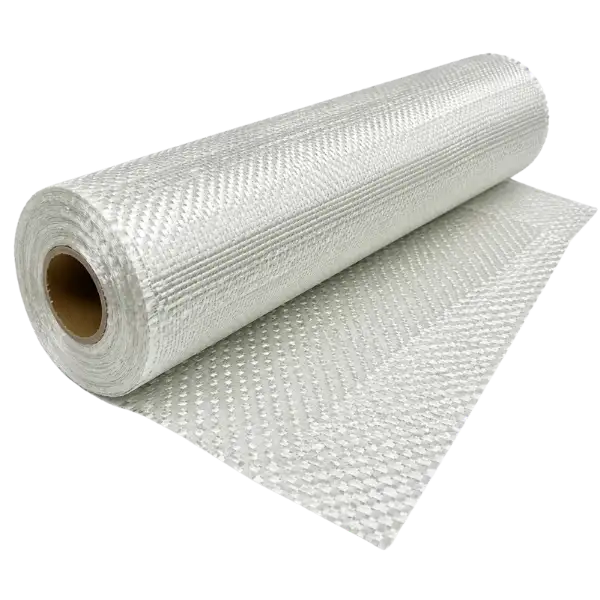
Multiaxial fibreglass fabric is a stitched reinforcement built from layers of glass fibres set at different angles commonly 0°, 90°, +45°, and −45° held together by a light stitching yarn instead of the over-under weave used in traditional woven roving. Because the fibres are laid straight rather than crimped over one another, more of their tensile strength carries through into the finished laminate.
As a fibreglass distributor in Gujarat and part of the wider fibre glass suppliers in India network, we supply this material to composite manufacturers who need strength in a specific direction or in several directions at once without laying up multiple separate layers of woven fabric. It is a common choice in FRP pultrusion, filament winding, vacuum impregnation, and structural hand lay-up work where laminate performance matters.
Fibreglass Fabric Range
Our Multiaxial Fibreglass Fabric Solutions
The range covers biaxial and multi-directional layouts in different densities, with veil or without veil, suited to FRP pultrusion, hand lay-up, filament winding, and vacuum work.
01
Multiaxial Fibreglass Fabric
Stitched multi-directional reinforcement used where the finished part needs strength in more than one axis without stacking multiple woven layers.
02
Fibreglass Reinforcement Fabric
General composite reinforcement across polyester, vinyl ester, and epoxy systems supports structural stiffness and consistent wall thickness.
03
FRP Fibreglass Fabric
Purpose-selected fabric for FRP industries producing tanks, panels, gratings, and structural profiles where strength-to-weight matters.
04
Composite Reinforcement Fabric
Advanced composite work automotive, marine, and industrial parts where the fibre orientation is chosen to match the load direction.
05
Fabric with Veil
A thin surface veil bonded on one side to improve surface finish, aid resin flow at the tool face, and support corrosion barrier layers.
06
Fabric without Veil
Standard reinforcement without the surface veil used in the core of the laminate where finish is not the primary concern.
Our Products
Multiaxial Fabric
Supplied in 361, 552, 592, and 900 gsm densities, with veil or without veil, for FRP pultrusion, vacuum impregnation, filament winding, and hand lay-up applications.
A stitched multi-directional glass reinforcement fabric supplied in roll form for composite production. Available in four common densities and with an optional surface veil, so the same base product can serve pultrusion, filament winding, vacuum impregnation, and hand lay-up work on different lines.
Category
Reinforcement Fabrics
Applications
FRP Pultrusion, Vacuum Impregnation, Filament Winding, Hand Lay-up
Form
Fabric
Available Grades / Specifications
Densities: 361, 552, 592 & 900 gsm; available with veil and without veil
Storage / Handling
Standard store rolls flat or on end in original packaging, in a dry, dust-free area, away from direct sunlight and moisture.
Widths, roll lengths, and packing can be arranged based on order size. For industrial use only; product data sheets are available on request.
Why It’s Used
Benefits of Using Multiaxial Fibreglass Fabric
-
Better strength utilization
Straight, uncrimped fibres transfer more of their tensile strength into the finished laminate.
-
Consistent thickness
Stitched construction gives even thickness across the roll, which helps predictable resin uptake.
-
Faster wet-out
The open, non-crimped structure allows resin to flow through the fabric more evenly during infusion.
-
Multiple orientations in one layer
A single multiaxial layer replaces two or more woven roving layers, reducing layup steps.
-
Good drapability
Sits well on curved moulds and complex shapes without bridging or fibre distortion.
-
Suitable for structural work
Widely used where the part carries real load tanks, blades, hulls, panels, and pultruded profiles.
Applications
Where Can Multiaxial Fibreglass Fabric Be Used?
Multiaxial fabric is used across composite production lines in Ahmedabad, wider Gujarat, and other parts of India anywhere the finished part needs directional strength.
Epoxy Resin
Epoxy resins have wide application range like Civil Construction,Electrical and Electronics, Composite,
LAPOX Epoxy Systems - By Chemical Category
- Bisphenol A Based Epoxy Resins
- Curing Agents – Phenalkamines
- Bisphenol F Based Epoxy Resins
- Curing Agents – Aromatic Amines : Modified
- Multifunctional Epoxy Resins
- Curing Agents – Aromatic Amines : Unmodified
- Cycloaliphatic Epoxy Resins
- Curing Agents – Linear Aliphatic Amines & Adducts
- Brominated Epoxy Resins
- Curing Agents – Cycloaliphatic Amines, their Adducts & Polyaminoamides
- Reactive Diluents
- Curing Agents – Formulated Anhydrides
LAPOX Epoxy Systems - By Application
How It Works
Our Multiaxial Fibreglass Fabric Selection Process
The right GSM, orientation, and veil choice depend on the part being made and the process running it, so we start with the production, not the product code.
-
Application Requirement Assessment
We look at the composite part being made, its structural requirement, and the process pultrusion, filament winding, hand lay-up, or vacuum infusion before suggesting a fabric.
-
Density & Orientation Selection
Lighter grades (361 gsm) are common for surface layers and finer parts; heavier grades (552, 592, 900) are used where structural strength is the priority.
-
Veil or No Veil
Fabric with veil is chosen where the tool-side surface finish or a corrosion barrier matters; plain fabric is used in the core layers of the laminate.
-
Fabric Handling & Cutting
Rolls should be stored flat or on end and cut cleanly to size. Loose fibre on cut edges can affect resin flow and layup quality.
-
Layup & Resin Integration
Correct orientation during layup is important. A multiaxial fabric placed off-axis will not deliver the strength direction it was chosen for.
-
Production Testing
A test panel or first part is checked for wet-out, fibre alignment, and finish before scaling up to full production.
Selection Guide
Choosing the Right Multiaxial Fibreglass Fabric
The right fabric is rarely just about density. Six factors usually decide the fit.
Composite application
Wind blades, tanks, boat hulls, and pultruded profiles each place different demands on the reinforcement.
Fibre orientation requirement
Uni-directional load calls for a different layout than parts that flex or carry load in two axes.
Resin compatibility
Polyester, vinyl ester, and epoxy systems each behave differently during wet-out the sizing on the glass matters.
Production process
Vacuum infusion and filament winding often favour specific GSM ranges and stitched layouts.
Required strength & finish
Structural parts, semi-visible parts, and finish-critical parts often mix different grades in the same layup.
Manufacturing environment
Storage humidity, cutting practice, and cleanliness all affect the fabric before it even reaches the mould.
Why Shanti Multilink
Why Choose Shanti Multilink for Multiaxial Fibreglass Fabric?
- We work with composite manufacturers across FRP, pultrusion, filament winding, and hand lay-up work, so fabric selection is guided by what actually happens on your line not a generic catalogue push.
- The range covers four common densities and both veil options, which means most requirements can be matched from stock. Where a specific orientation or width is needed, we help arrange it rather than trying to fit an off-the-shelf grade.
- As a fibreglass supplier Ahmedabad, Gujarat, and Rajasthan based manufacturers work with, we keep communication straightforward on availability, packing, and pricing so repeat orders are predictable and there are no surprises on delivery day.
- Application guidance storage, cutting, layup direction, resin compatibility is available if your team is new to multiaxial work or moving over from woven roving. Practical advice, not a sales pitch.
FAQs
Frequently Asked Questions
Multiaxial fibreglass fabric is used as a reinforcement layer in composite parts FRP tanks, pultruded profiles, wind blades, boat hulls, and structural panels. It gives strength in multiple directions in a single layer of fabric, which reduces layup steps in the mould.
Woven roving uses fibres crimped over and under each other. Multiaxial fabric holds straight, uncrimped fibre layers together with a light stitching yarn. Because the fibres are not bent, more of their tensile strength carries into the finished laminate.
It delivers directional strength without stacking multiple woven layers. That means faster layup, more predictable thickness, and better mechanical performance for structural FRP products.
Lighter grades like 361 gsm are common for surface and finer layers. 552 and 592 gsm are general-purpose reinforcement grades. 900 gsm is used where thickness and structural strength are the priority. The right choice depends on part thickness, load, and the resin system.
“With veil” means a thin surface mat is bonded on one face of the fabric. It supports better surface finish, helps resin flow at the tool face, and is often used where a corrosion barrier layer is required. “Without veil” is standard reinforcement used in the core of the laminate.
Yes. Multiaxial fabric is regularly used in FRP pultrusion, vacuum impregnation, filament winding, and hand lay-up. The fibre orientation and GSM should be matched to the process and the loading direction of the finished part.
It comes down to how the space is used traffic, load, moisture, and the finish you want. Sharing these details with us helps us recommend a suitable epoxy resin system for your project.
Get the Right Multiaxial Fibreglass Fabric for Your Manufacturing Needs
Tell us about your part, resin system, and process as a fibreglass distributor in Gujarat serving composite manufacturers across India, we’ll help you match the right density, orientation, and veil option, along with product details and a quotation.